West Okoboji Lake is the crown jewel of Iowa’s lakes – the deepest, clearest natural lake in the state and the sparkling heart of the Iowa Great Lakes resort region. A glacier-carved “blue water” lake of remarkable clarity, it has drawn vacationers for more than a century to its beaches, marinas, sailing regattas and the historic Arnolds Park amusement park on its shore. For many Iowans, summer simply means Okoboji.
This guide covers West Okoboji top to bottom: the famous blue water and its geology, the boating and sailing, the fishing, Arnolds Park and the resort scene, and how to plan a visit. It’s part of our growing Iowa Lakes Database.
- West Okoboji Lake at a glance
- A rare “blue water” lake
- Boating, sailing and water sports
- Arnolds Park and the resort scene
- Fishing West Okoboji
- The Iowa Great Lakes
- Getting there and what’s nearby
- Know before you go
- Frequently asked questions
- How deep is West Okoboji Lake?
- Why is West Okoboji called a “blue water” lake?
- What fish are in West Okoboji?
- What is there to do at Okoboji?
- Where is West Okoboji Lake?
West Okoboji Lake at a glance
- Surface area: ~3,847 acres – the centerpiece of the Iowa Great Lakes
- Depth: about 136 feet – the deepest natural lake in Iowa
- Location: Dickinson County, northwest Iowa (Okoboji, Arnolds Park & West Okoboji)
- Formed: by glaciers (a deep kettle lake of the Wisconsin glaciation), spring-fed and exceptionally clear
- Top fish: walleye, yellow perch, smallmouth & largemouth bass, bluegill, crappie, northern pike, muskie
A rare “blue water” lake
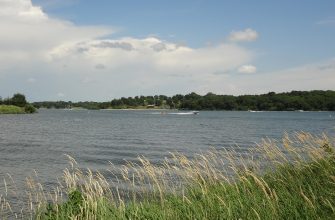
West Okoboji is often called one of only a handful of true “blue water” lakes in the world – deep, cold, spring-fed and glacially formed, with water clear enough to give it a striking blue-green color rare in the Midwest. The lake was gouged out by the last great ice sheet, leaving a deep kettle basin fed by springs and protected, over the years, by sustained efforts to guard its remarkable water clarity. That clarity is the foundation of everything Okoboji is known for: the beaches, the sailing, the smallmouth bass and the resort culture.
Boating, sailing and water sports
Okoboji is, above all, a boating lake. Its deep, clear water and protected bays make it one of the premier sailing destinations in the Midwest – the Okoboji Yacht Club hosts regattas all summer – and it’s alive with powerboats, pontoons, water-skiers, wakeboarders and paddlers. Marinas ring the shore with rentals, fuel and slips, and the historic excursion boat Queen II offers narrated cruises. Swimming beaches, including the one at Arnolds Park, fill on hot days.
Arnolds Park and the resort scene
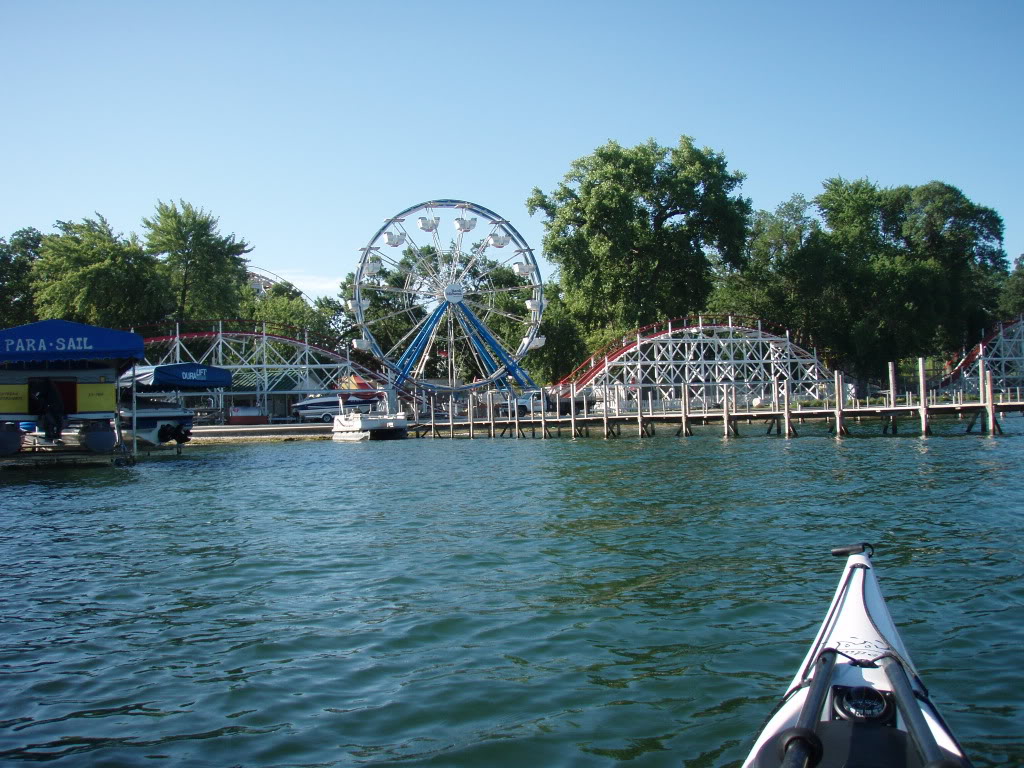
On the lake’s south shore sits Arnolds Park Amusement Park, a beloved lakeside park dating to the 1880s, home to “the Legend” – one of the oldest wooden roller coasters in the country – plus rides, a midway, the Iowa Great Lakes Maritime Museum and a popular beach. The surrounding towns of Okoboji, Arnolds Park and West Okoboji are packed with resorts, restaurants, mini-golf and the tongue-in-cheek “University of Okoboji” spirit-wear that’s become a regional icon. It’s the most developed, vacation-oriented lake in Iowa.
Fishing West Okoboji
The clear, deep water makes Okoboji a diverse and rewarding fishery:
- Walleye – a prime target, fished over the deeper structure and at low light.
- Yellow perch and bluegill – abundant panfish in the clear water, popular through the ice in winter.
- Smallmouth and largemouth bass – the rocky, clear water grows strong smallmouth especially.
- Muskie and northern pike – the lake holds toothy predators, including muskie, for trophy hunters.
- Crappie round out the catch.
An Iowa fishing license is required. The lake fishes well from boats and from shore, and the winter ice fishery for perch and bluegill is a regional tradition. Because the water is so clear, lighter line and natural presentations help.
The Iowa Great Lakes
West Okoboji is the heart of the Iowa Great Lakes chain, which also includes Big Spirit Lake (the largest natural lake in Iowa), East Okoboji, and the smaller Upper and Lower Gar, Minnewashta and Center lakes. Together they form a connected glacial-lake region unlike anywhere else in Iowa – and the busiest summer destination in the state.
Getting there and what’s nearby
West Okoboji is in Dickinson County, northwest Iowa, near the Minnesota line – about 1.5 hours north of Sioux City and 3.5 hours northwest of Des Moines, via US-71. The towns of Okoboji, Arnolds Park, Spirit Lake and Milford ring the Iowa Great Lakes, with the Spine Trail connecting them for cyclists.
Know before you go
- Fishing license: an Iowa license is required; note muskie and bass regulations.
- Busy in summer: Okoboji is Iowa’s top resort lake – expect crowds and book lodging early.
- Protect the clarity: clean, drain and dry boats – the lake’s famous clear water is carefully protected.
- Best seasons: summer for boating, beaches and Arnolds Park; winter for ice fishing.
Frequently asked questions
How deep is West Okoboji Lake?
About 136 feet – the deepest natural lake in Iowa – and exceptionally clear, glacially formed and spring-fed.
Why is West Okoboji called a “blue water” lake?
Its deep, cold, spring-fed, glacially formed water is so clear that it takes on a striking blue-green color – making it one of only a handful of true “blue water” lakes in the world.
What fish are in West Okoboji?
Walleye, yellow perch, bluegill, smallmouth and largemouth bass, muskie, northern pike and crappie – a diverse fishery in clear water.
What is there to do at Okoboji?
Boating and sailing, swimming, the historic Arnolds Park Amusement Park and its wooden roller coaster, the Queen II excursion boat, fishing, and the resort towns around the Iowa Great Lakes.
Where is West Okoboji Lake?
In Dickinson County, northwest Iowa near the Minnesota line, about 1.5 hours north of Sioux City via US-71.
Related: explore more of the largest lakes in Iowa, or head back to the Iowa Lakes Database.
Explore more Iowa lakes: the largest lakes in Iowa and the deepest lakes in Iowa.